Plenary and key lectures

This section contains preliminary titles of the plenary and key lectures along with the short bio of the lecturers. To see the bio, please click the title the name (you can also show or hide everything).

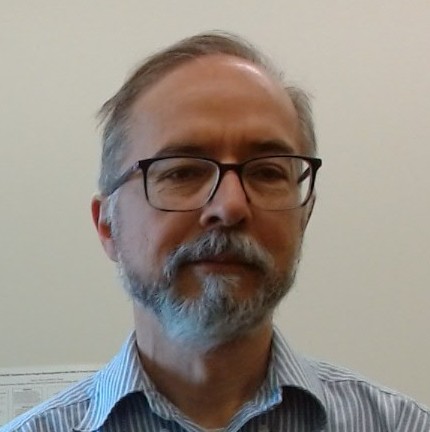
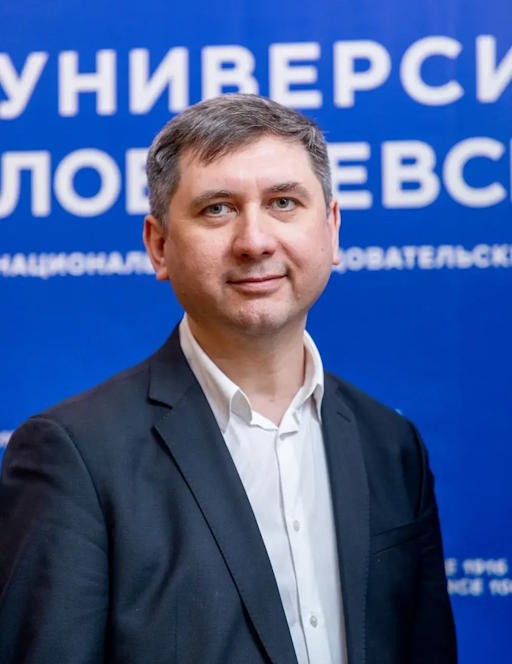
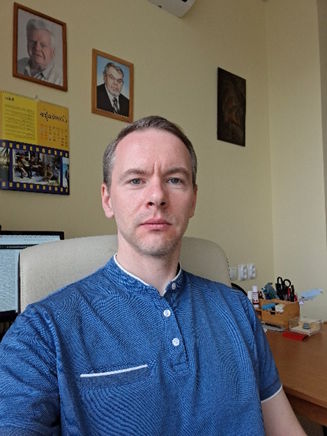
Vladimir A. Cherepanov
photo

Vladimir A. Cherepanov (Professor, Institute of Natural Sciences and Mathematics, Ural Federal University, Ekaterinburg, Russia) graduated from Ural State University in 1977. He received his PhD in 1984. Since 1977 to 2001 he has been working in the Ural State University starting from research fellow and later as Lecturer, and Assistant Professor. After defending Dr. Sci. Thesis at 2001, he became a full professor (2002) and served as Dean of the Chemical Faculty (2002 – 2011) and Head of the Department of Physical Chemistry (Physical and Inorganic Chemistry since 2016) (2008 – 2025). Currently, he is a professor of this Department and a chief researcher in the Institute of Natural Sciences and Mathematics. He worked under exchange and grant programs at the universities of Birmingham (1987–1988), Edinburgh (1993–1994), Oxford (2006) in the UK, and at ITAC Company (Japan, 2000, 2001). His research interests are mainly focused on the study of phase equilibria in oxide systems, as well as stability, oxygen nonstoichiometry, defect structure and functional properties of oxide materials.

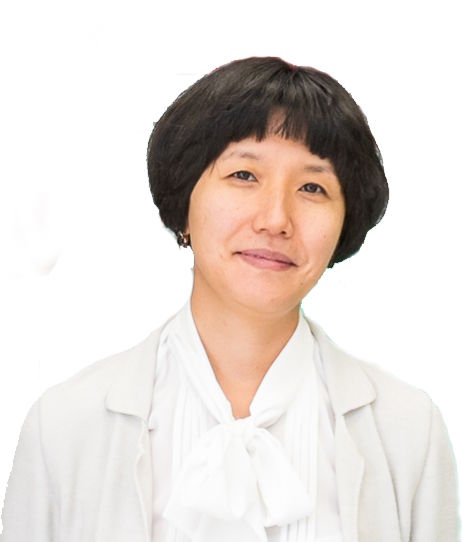
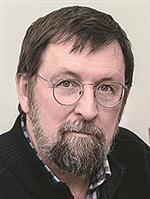
Valery V. Gorbatchuk
photo

Doctor of Chemical Sciences, Professor in the Department of Physical Chemistry at the A.M. Butlerov Chemical Institute of Kazan Federal University, kpfu.ru/Valery.Gorbatchuk. He graduated from the Chemistry Department of Kazan State University (now Kazan Federal University) in 1979. He defended his PhD thesis in 1982 and his doctoral dissertation in 2003. He specializes in the thermodynamics of intermolecular interactions, molecular recognition, supramolecular chemistry, and the polymorphism of organic substances, including medicinal substances.

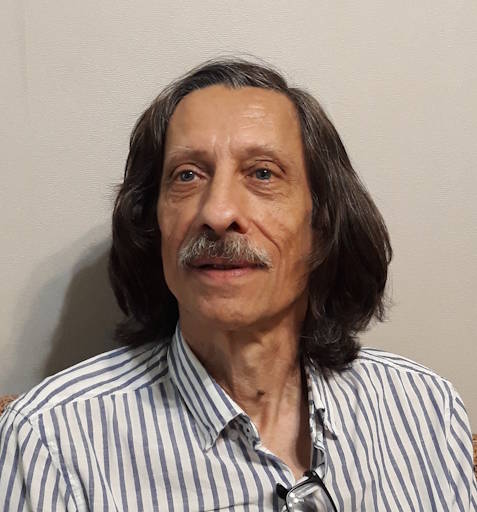
Michael G. Kiselev
photo

Michael G. Kiselev is a Doctor of Chemical Sciences, Director of the G.A. Krestov Institute of Solution Chemistry of the Russian Academy of Sciences, and Head of the Laboratory of NMR Spectroscopy and Numerical Methods for Studying Liquid Systems.

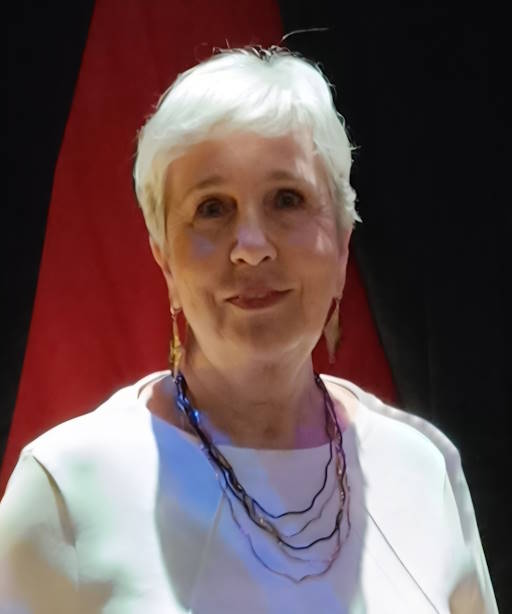
Elena N. Korchagina

E.N. Korchagina was born in Leningrad to a family of geophysicists in 1950. After graduating from high school with honors, she unexpectedly entered the M.I. Kalinin Leningrad Polytechnic Institute in 1967, studying in the Department of Aerothermodynamics, Faculty of Physics and Mechanics. While working on her thesis, she gave birth to her first son, but this did not prevent her from defending her thesis on time. Her first job after graduating in 1973 was at the Galurgy Research Institute, where she worked first as an engineer and then as a junior researcher. In 1981, she defended her dissertation for the degree of Candidate of Technical Sciences. In 1987, she entered a competition to work at the D.I. Mendeleev All-Union Research Institute of Metrology as a senior researcher and custodian of the state primary standard of the unit of combustion energy (GET 16-78). Since then, all her energy, creativity, and passion have been connected with this standard and combustion calorimetry. She has developed numerous regulatory documents (GOSTs, methods, and recommendations on metrology), published over 70 articles, developed a large set of standard samples for bomb and gas calorimetry, and is a long-time organizer of seminars and advanced training courses on “Combustion Calorimetry and Measurement of Fuel Quality Parameters.” In 2004, she was appointed head of the Laboratory of Calorimetry and High-Purity Substances for Metrology Purposes. Work to improve the standard, which begun in 2007, culminated in the creation of a new-generation standard facility and the approval of the state primary standard for units of combustion energy, specific combustion energy, and volumetric combustion energy (GET 16-2010). In 2012, under her leadership, the state special standard for the unit of heat quantity in solution and reaction calorimetry (GET 133-2012) was reapproved, and she was appointed its custodian. In recent years, both standards have undergone improvement procedures. GET 16 was modernized and approved in a new configuration in 2018 with the addition of two gas calorimeters. In 2023, the laboratory completed a project to improve GET 133, which enabled the implementation of the isothermal titration calorimetry method and expanded the measurement range of the primary special standard GET 133 to include microcalorimetry.

The laboratory is currently implementing projects to create state reference materials for the temperature and heat of fusion of organic substances, expand the range of reference materials for volumetric energy of combustion and Wobbe index, and develop multiparameter reference materials for coal quality parameters.

For over ten years, the laboratory has been providing interlaboratory comparison tests of coal, petroleum products, and natural gas, involving more than 100 laboratories in Russia and neighboring countries.

Under the leadership of E.N. Korchagina, as coordinator, the laboratory organized and successfully conducted a number of international comparisons of national standards within the COOMET and Euromet frameworks, involving China, Turkey, Belarus, France, Germany, and Romania.

Alexander P. Nemudry

A.P. Nemudry, Doctor of Chemical Sciences, Corresponding Member of the Russian Academy of Sciences, Director of the Institute of Solid State Chemistry and Mechanochemistry SB RAS, is a specialist in solid-state chemistry and materials science and the author of over 500 scientific papers, including one monograph, two chapters in monographs, and eight patents.

A.P. Nemudry has made significant contributions to the study of the real structure and reactivity of nonstoichiometric ABO3-δ perovskites with mixed oxygen and electron conductivity (MOEC). He established the mechanisms of nanostructuring in MOEC oxides by introducing compositional disorder into the oxygen and cation sublattices through a reduction in the size of ferroelastic 90° twins and coherent domain fusion resulting from local ordering in the B sublattice. It was shown that domain walls act as channels for facilitated diffusion of oxygen ions. Based on nanostructured oxides, the following have been developed:

  • Materials for oxygen-permeable membranes that can be used in catalytic membrane reactors for hydrocarbon conversion;
  • Cathode materials that provide high peak power for microtubular solid oxide fuel cells due to high rates of oxygen exchange with the gas phase.

Under the supervision of A.P. Nemudry, equipment and new relaxation methods for obtaining equilibrium and kinetic data on oxygen exchange for oxides have been developed.

In the kinetics of oxygen exchange between oxides with the gas phase, A.P. Nemudry was the first to propose considering nonstoichiometric oxides as continuous homologues and a methodology for analyzing kinetic data in an isostoichiometric cross-section.

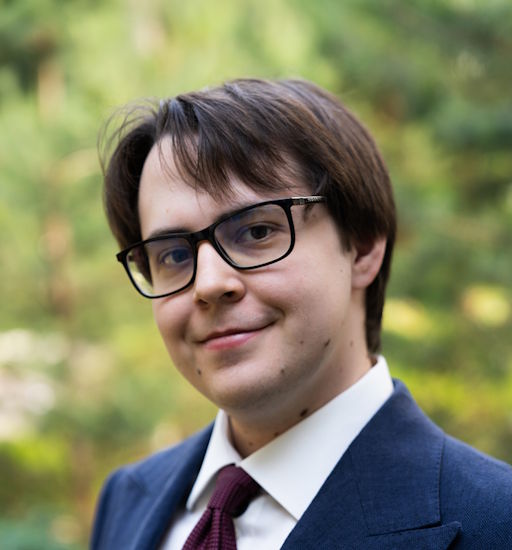
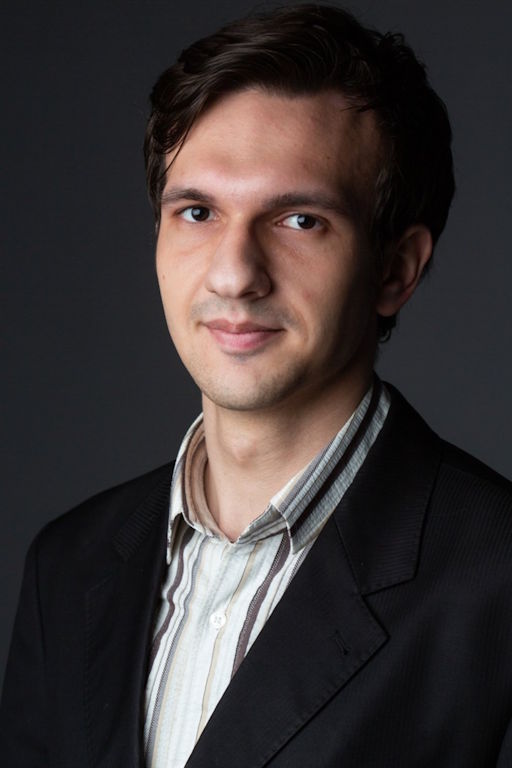
Artem A. Novikov
photo

Artem Andreevich Novikov, PhD in Chemistry, is a Junior Researcher in the Laboratory of Chemical Thermodynamics at the Faculty of Chemistry at Lomonosov Moscow State University. He has published in peer-reviewed journals and participated in Russian and international conferences.

In 2020, he graduated with honors from the Faculty of Chemistry at Lomonosov Moscow State University. In 2025, he defended his dissertation for the degree of PhD in Chemistry, which focused on the thermodynamic modeling of water-salt systems based on sodium and potassium orthophosphates. He is also a teaching fellow in the Department of Physical Chemistry.

His research interests include the chemical thermodynamics of solutions, including the modeling of water-salt systems and gas solutions in liquid media.

Alexander M. Toikka
photo

Alexander Matveevich Toikka is a Doctor of Chemical Sciences, Professor, Head of the Department of Chemical Thermodynamics and Kinetics at the Institute of Chemistry at Saint Petersburg State University (SPbU), and an Honorary Professor of SPbU. He is a graduate of the Leningrad (Saint Petersburg) State University (Faculty of Chemistry, Department of Solution Theory – Chemical Thermodynamics and Kinetics), completed his postgraduate studies at the same department, and then worked as a research fellow, associate professor, and professor of the department. From 1999 to the present, he has been the Head of the Department of Chemical Thermodynamics and Kinetics at Saint Petersburg University. In his work, A.M. Toikka continues the traditions of the founder of the department (1951), Professor A.V. Storonkin, and other outstanding scientists whose names are associated with the formation and development of the Department of Solution Theory (since 1978 – Chemical Thermodynamics and Kinetics): Academicians A.I. Rusanov and M.M. Shultz, Professors M.P. Susarev, V.T. Zharov, V.K. Filippov, and others.

His research interests encompass a wide range of contemporary problems, from fundamental issues of general, chemical, and nonequilibrium thermodynamics to chemical engineering. Among his key achievements, fundamental results, both theoretical and experimental, in the field of reaction-mass transfer processes and combined processes in chemical engineering are noteworthy. This work required obtaining a large array of experimental data on equilibria and processes in multicomponent systems, analyzing and generalizing the thermodynamic behavior of these systems, and applying principles of thermodynamic stability theory, including studies of critical states in chemically reacting environments. One of the key features of A.M. Toikka’s approach to solving thermodynamic problems, in addition to a thorough analysis of fundamental principles, is the use of the apparatus of nonequilibrium thermodynamics, laws at the atomic and molecular level, and new mathematical methods. He established a new research program at St. Petersburg State University focused on fundamental and applied membrane technology and materials science: the creation and study of polymer and composite membranes for pervaporation and gas separation.

A.M. Toikka’s research results have been published in over 170 papers in high-ranking international journals (according to Scopus and Web of Science 2026), focusing on the thermodynamic stability of complex systems, phase and chemical processes in heterogeneous systems, and critical states. He has supervised nine grants from the Russian Foundation for Basic Research (since 1993), including the international grant from the Russian Foundation for Basic Research (RFBR-Iran) (2017-2020), and four grants supported by the Russian Science Foundation in the fields of membrane processes, critical phenomena in chemically reacting environments, and related problems. Twelve PhD theses and one doctoral dissertation have been defended under A.M. Toikka’s supervision.

Chairman of the Physical and Colloid Chemistry Section of the D.I. Mendeleyev Russian Chemical Society. Member of the Fluid Separation Working Group of the European Federation of Industrial Engineers, the IUPAC Subcommittee on Solubility, and the Chemical Thermodynamics and Thermochemistry Section of the Scientific Council on Physical Chemistry of the Russian Academy of Sciences. One of the organizers of the new academic program “Chemistry, Physics, and Mechanics of Materials” at Russian universities (as part of the Educational and Methodological Council headed by Academician Yu.D. Tretyakov). Member of the Presidium of the Educational and Methodological Council of the Federal University of Higher Education, Ufa State Scientific Center for Chemistry (training areas 04.03.02, 04.04.02). He was an associate editor and a member of the editorial boards of international journals (Chemical Engineering Journal, Membranes, and others), gave invited lectures at European universities (Heidelberg, Kaiserslautern, Rostock, and others), plenary talks, and was a visiting professor at the Toulouse Polytechnic Institute (France, 2016-2017). He was awarded the “Honorary Worker of Higher Professional Education of the Russian Federation” badge (2009). Honorary Professor of St. Petersburg State University (since 2024).

Sergey P. Verevkin
photo

Sergey P. Verevkin: Graduated from Kuibyshev Politechical Institute in 1978. Ph.D. in Minsk State University, USSR in 1984. Postdoctoral work at the University of Freiburg (Germany) and National Institute of Standards and Technology (USA). DAAD* Fellow (1987-1988, Germany) and Alexander von Humboldt Fellow (1991-1993, Germany). From 2010 to 2023 Professor for Physical Chemistry at the University of Rostock (Germany). Since 2017 he has been a Professor of Chemistry at Samara State Technical University. He has been Councilor of the International Association of Chemical Thermodynamics and Chairperson of Scientific Committee “Thermodynamics & thermochemistry” of International Confederation for Thermal Analysis and Calorimetry. He has been a Senior Expert at the Institute of Technical Thermodynamics at the University of Rostock since 2024. He published more than 500 scientific papers. His main interest is the application of thermochemistry for the development of advanced materials.

* Deutscher Akademischer Austauschdienst e.V. (DAAD, «Германская служба академических обменов») входит в перечень иностранных и международных организаций, деятельность которых признана нежелательной на территории Российской Федерации.

Mikhail I. Yagofarov
photo

Mikhail I. Yagofarov was born in 1997 in Kazan. During his school years, he entered the Physical Chemistry Department at Kazan University, where Olympiad training was held; he became the winner of the All-Russian and International Chemistry Olympiads. He graduated from the A.M. Butlerov Chemical Institute of Kazan Federal University in 2019. In 2024, he defended his dissertation for the degree of Doctor of Chemical Sciences in the specialty 1.4.4. Physical Chemistry on the topic: “New approaches to the study of temperature dependences of thermodynamic functions of phase transitions of organic non-electrolytes.” Co-author of 70 scientific articles in the field of thermodynamics of organic compounds. Organizer and member of the jury of Olympiads held by Kazan Federal University. Laureate of All-Russian and regional prizes for achievements in scientific and pedagogical work. Associate Professor of the Physical Chemistry Department.

Lyudmila N. Zelenina

After graduating from NSU, Lyudmila Nikolaevna Zelenina worked at the Institute of Inorganic Chemistry of the Siberian Branch of the Russian Academy of Sciences in the Laboratory of Chemical Thermodynamics of Inorganic Materials as a senior researcher. Since 2007, she has held the rank of associate professor in physical chemistry. She also teaches laboratory classes on chemical thermodynamics to third-year chemistry students in the Department of Physical Chemistry of the Faculty of Natural Sciences at NSU and is the author of several textbooks. A qualified specialist in experimental thermodynamics, she has authored approximately 150 scientific publications devoted to the study of new compounds using tensimetric and calorimetric methods.

Andrey Yu. Zuev
photo

Andrey Yu. Zuev (Professor, Institute of Natural Sciences and Mathematics, Ural Federal University, Ekaterinburg, Russia) graduated from Ural State University in 1982. He received his PhD in 1986. From 1987 to 1999, he worked successively as a senior researcher and associate professor at Ural State University. From 2000 to 2005, he was a research fellow at the Research Center in Jülich, Germany. In 2008, he was a visiting scholar in the Department of Chemical Engineering at the University of Washington. In 2012, after receiving his PhD, he became a professor of physical chemistry at Ural Federal University. His research interests mainly focus on the thermodynamics of formation and disordering of advanced oxide materials as well as studying the properties of these materials governed by their defect structure.

Irina A. Zvereva
photo

Irina A. Zvereva is a professor in the Department of Chemical Thermodynamics and Kinetics at the Institute of Chemistry at St. Petersburg State University. She is the founder and long-time director of the Thermal Analysis and Calorimetry Resource Center at the St. Petersburg State University Science Park.

She is the director of 20 research projects supported by Russian and international foundations. She is a member of the editorial boards of the Journal of Thermal Analysis and Calorimetry (Springer) and Glass Physics and Chemistry (MAIK, Springer). She is a member of the organizing and scientific committees of more than 10 conferences in the field of materials chemistry and thermal analysis.

She is the author of a monograph, two chapters in international monographs, and over 200 articles in scientific journals. Her current research focuses on the development of catalysts and photocatalysts and the study of their thermodynamic and functional properties.